Watch development / engineering
Custom Watch Development
From design direction to physical prototype.
This project developed a complete mechanical watch rather than a single component. Case, dial, movement integration, bracelet and caseback were treated as parts of one system — and the design was still moving while the engineering was being resolved.
It ran from an evolving design direction through system engineering to a physical prototype, reviewed as an object and prepared for a scheduled watch-show presentation.
- Scope
- Complete mechanical watch
- Engineering
- Case, dial, movement integration, bracelet
- Result
- Physical prototype
02 — Overview
A complete watch, not a component.
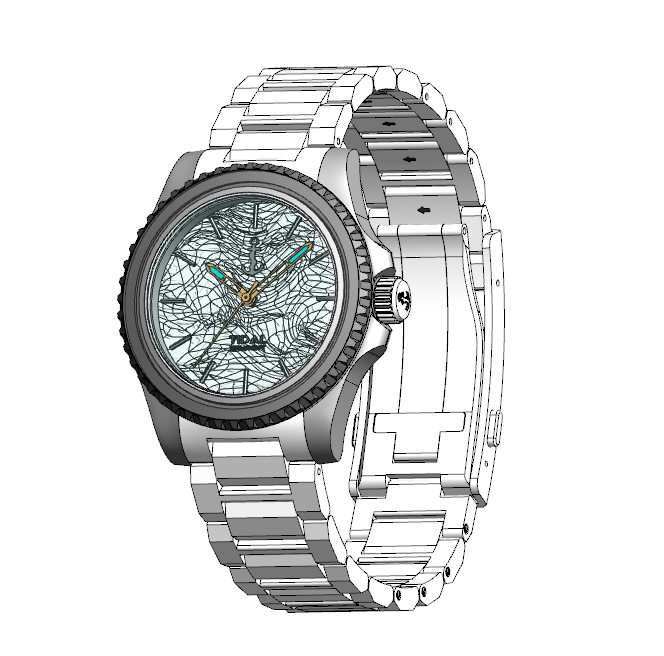
The work covered a complete mechanical watch. Case engineering, dial engineering, movement integration, bracelet engineering, clasp integration, crown detail and the caseback were developed together, because a decision in any one of them constrains the others.
That is the difference between supplying parts to a drawing and developing a watch. The interfaces between components are where a specification is actually settled, and they are why the parts have to move together rather than in sequence.
- Case engineering
- Dial and hand engineering
- Movement integration
- Bracelet, end-link and clasp development
- Crown-tube and caseback architecture
- Prototype review
03 — Design
An evolving design.
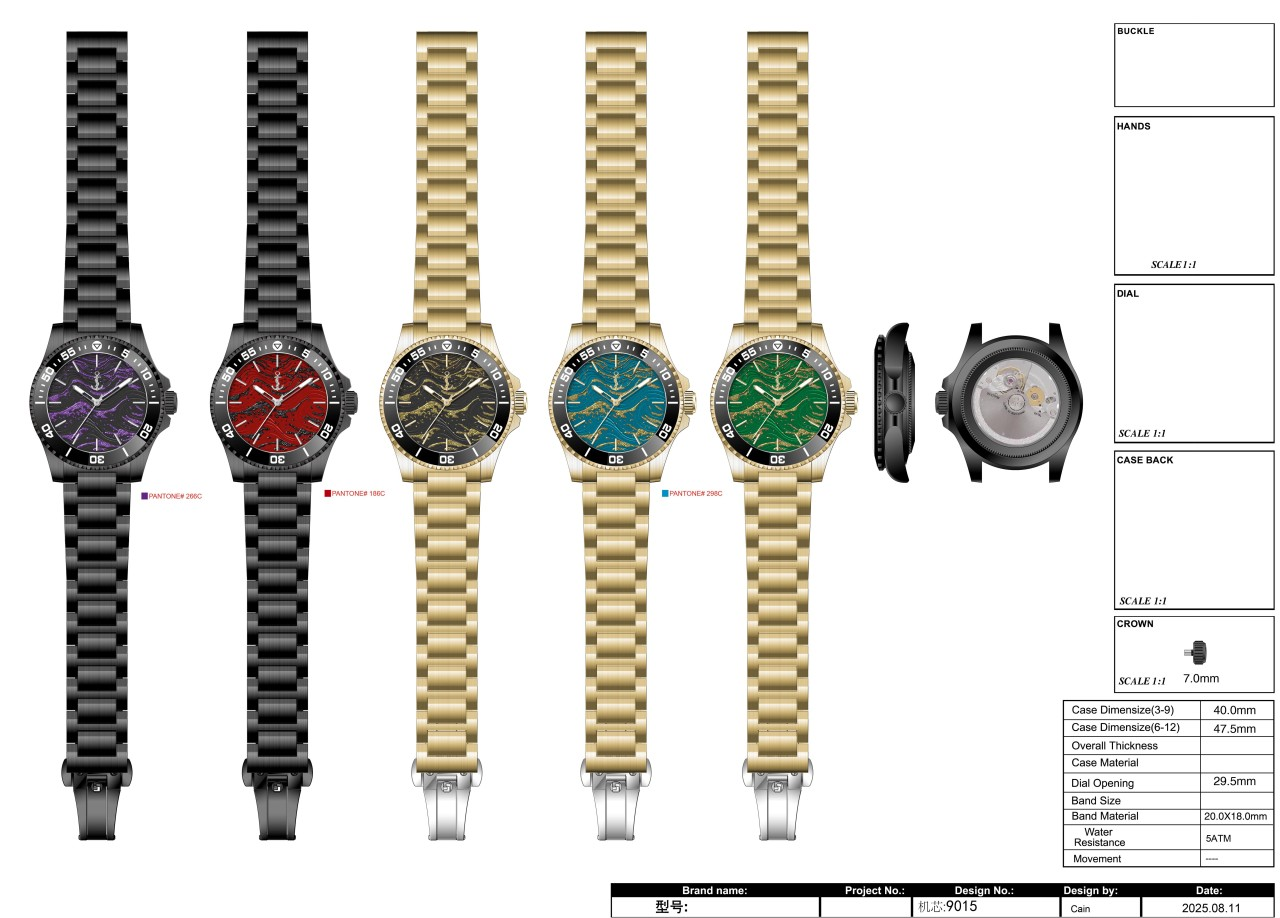
The project did not begin as a frozen manufacturing package. The design direction was developed through multiple iterations, and colour and visual decisions were still being resolved while component engineering was under way.
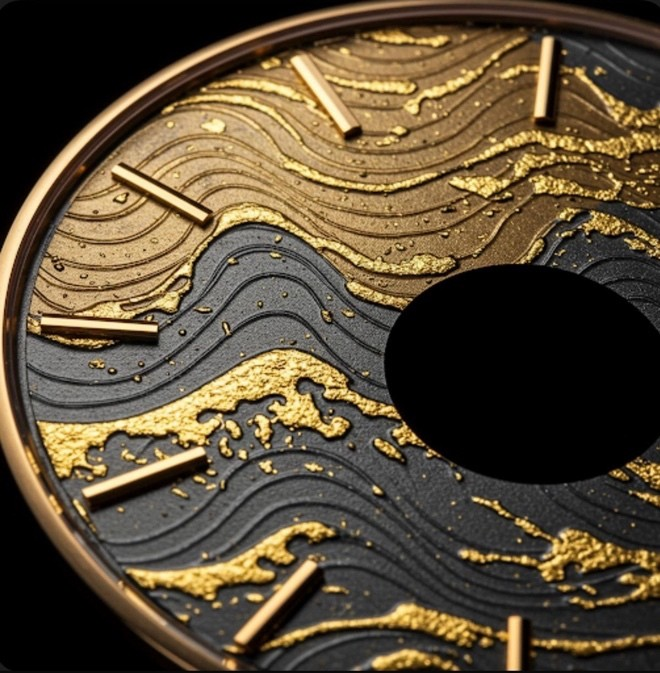
The dial carried a pronounced relief surface. A relief dial is not only a visual decision: it raises the questions that follow, because a raised surface sits in the space that hands and case depth also have to occupy.
04 — Engineering
Engineering the complete watch.
Where the design met the physical limits of the watch, the final engineering package settled the decisions below.
- Case construction
- SUS 316L
- Case diameter
- Approximately 40 mm
- Overall length, lug to lug
- Approximately 47.5 mm
- Movement
- Miyota 9039
- Crystal and components
- Sapphire
- Water resistance
- Engineered to a 20 ATM target
- Bracelet
- Engineered assembly, removable links, screw-based construction
The case size and length are recorded as directions rather than as a measured specification. The water-resistance figure is an engineering target and not a tested rating; no test result is published.
05 — Interfaces
Component interfaces.
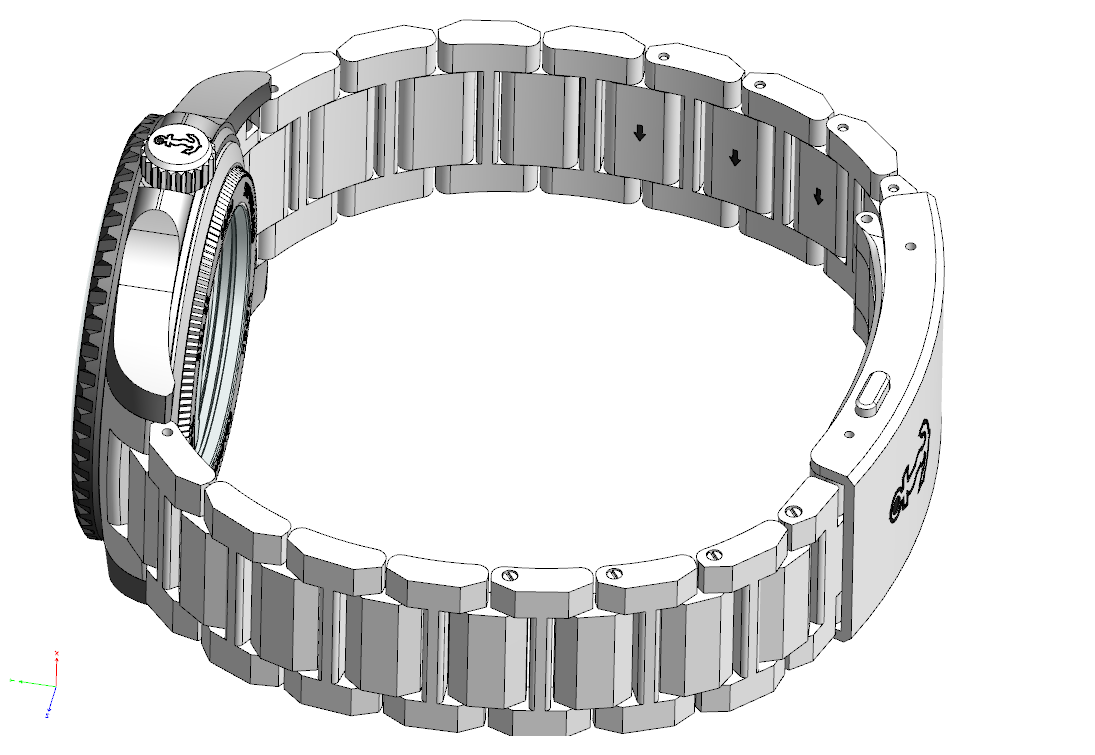
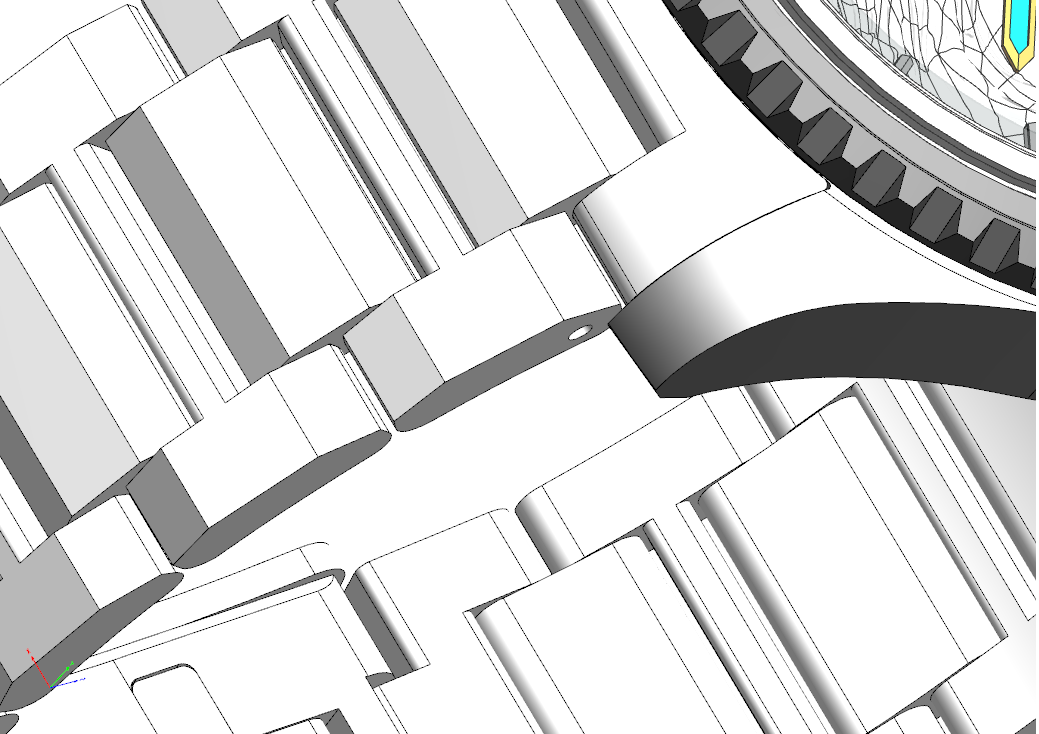
A watch is decided at its interfaces: how the bracelet meets the case, how the crown tube passes through the mid-case, how the caseback closes the assembly. Each of those joints was engineered as part of the same development.
Removable, screw-constructed bracelet links turn the bracelet into a tolerance chain rather than a single part, and end-link geometry is what keeps that chain aligned to the case.
- Case and end-link geometry
- Crown-tube architecture
- Caseback architecture
06 — Prototype
Prototype and result.
A physical prototype was completed and prepared for a scheduled watch-show presentation.
Prototype review was used to settle decisions that could not be judged from renderings alone — the point at which a development project stops being a design and starts being a watch.
- Physical prototype completed
- Prototype delivered for a scheduled watch-show presentation
- Production and preorder planning followed the prototype
Have a watch project in development?
Send the brief, the drawings, or the idea. The first review is a conversation about what the project needs, not a quotation.