Capabilities
Engineering the watchas a complete system.
A watch project brings together case architecture, components, movement, dial, hands, finishing, assembly and testing. Each decision affects the next.
Index
Capability index.
Eight areas of work, each part of the same project. Select one to see how it connects to the others.
A project can begin either from a design and specification you bring, or from a concept our engineering team develops with you.
- Watch developmentEarly decisions — case architecture, component interfaces, materials and movement — reviewed before anything is manufactured.
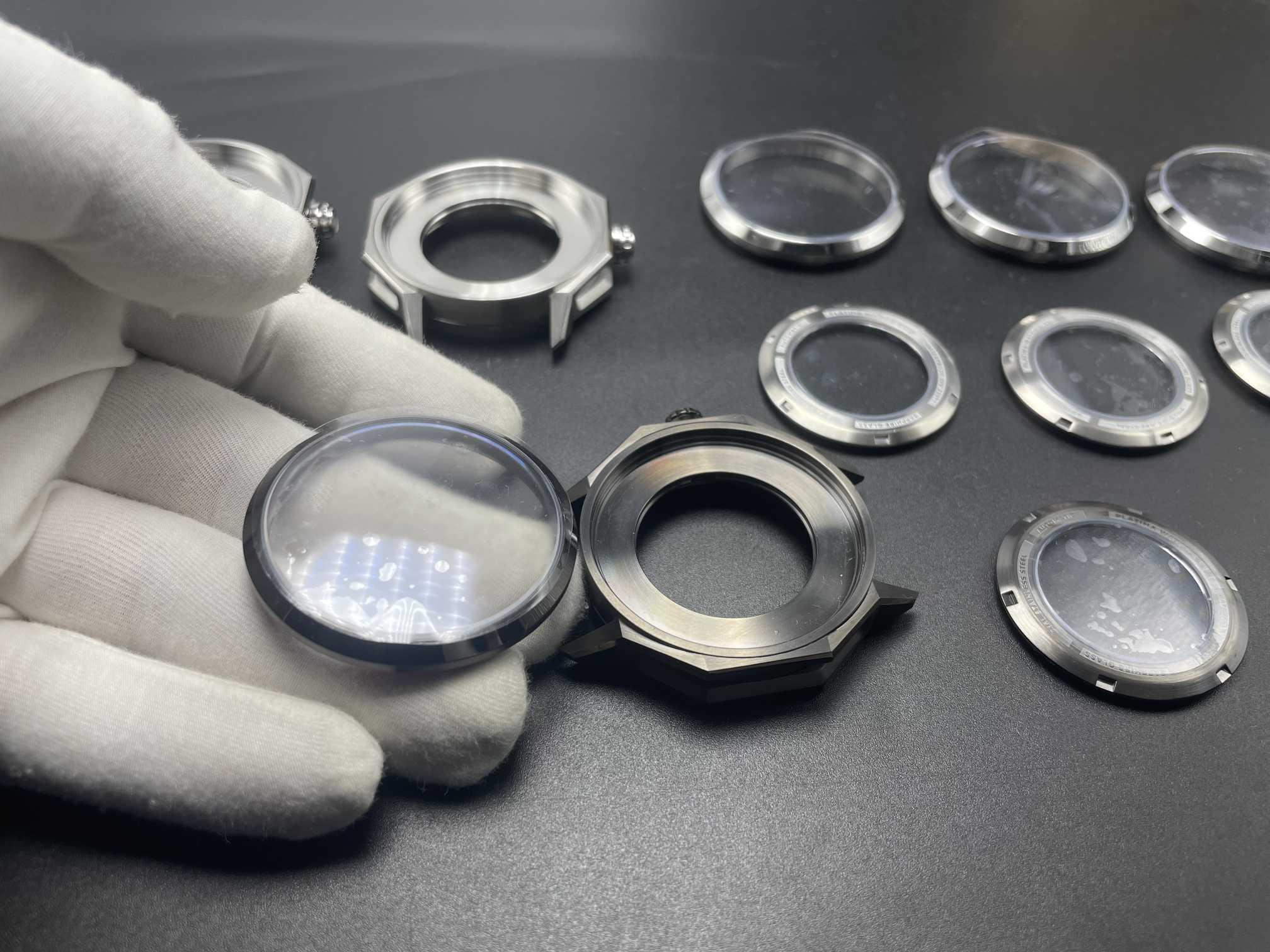
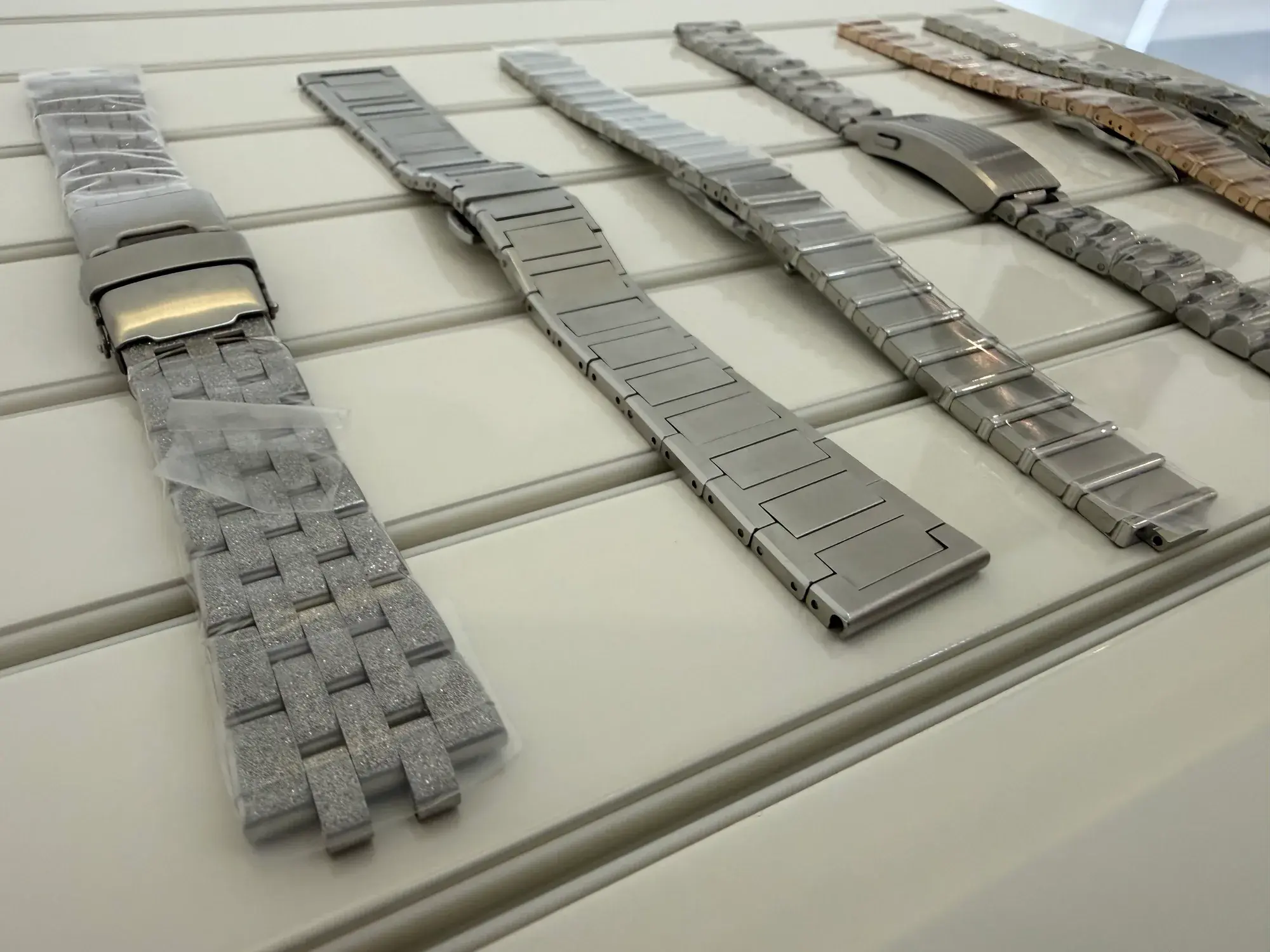
- Case and componentsCustom watch case and bracelet development: bezel, caseback, crown and end links produced as one mechanical system rather than separate parts.
- CNC machiningComplex component geometry produced to a specification that can be repeated across mating parts.
- Dial and handsCustom watch dial and hand development: architecture, markers, printing and hand design, resolved against the movement beneath them.
- Movement integrationMovement selection and the internal architecture it dictates — stem, dial, hands and caseback clearance.
- Surface finishingBrushing, polishing, blasting and coating — and the transitions between them.
- AssemblyWatch assembly, where every decision made upstream is tested at once.
- Testing and quality controlWatch manufacturing quality control: inspection and functional checks carried through the build, not only applied at the end.
Watch development
A watch is largely decided before its parts exist. Case architecture, component interfaces, materials and movement constrain one another, and an early decision is expensive to reverse.
Reading a design for the constraints it implies is what turns a concept into something that can be built.
Project evaluation
What is already defined, and what remains open.
Concept review
What the design implies for components, assembly and cost.
Manufacturability
Can the intended geometry and interfaces be produced repeatably?
Component architecture
How case, bezel, caseback and bracelet work as one assembly.
Movement and materials
How these choices set case geometry and dial interfaces.
Prototyping
Validate fit, function and appearance before production.
Preparation for production
Turn an approved prototype into a repeatable specification.
Demonstrated in
Case and components
The case is not a shell around a movement. It is a sealed, load-bearing assembly whose geometry decides how the crystal, crown, caseback and bracelet meet.
Those interfaces resolve together. Raise the bezel and the crystal moves with it; move the crystal and the dial position changes.
Geometry
Profile, lug form and bezel proportion, read as one object.
Interfaces
How adjacent components locate, seal and bear against one another.
Sealing
Gasket paths and the surfaces they depend on.
Crystal interface
How the crystal is retained and seated.
Crown and tube
Stem alignment, crown position, and sealing at the crown.
Bracelet and end links
How end links meet the lugs, and how fit follows the case.
CNC machining
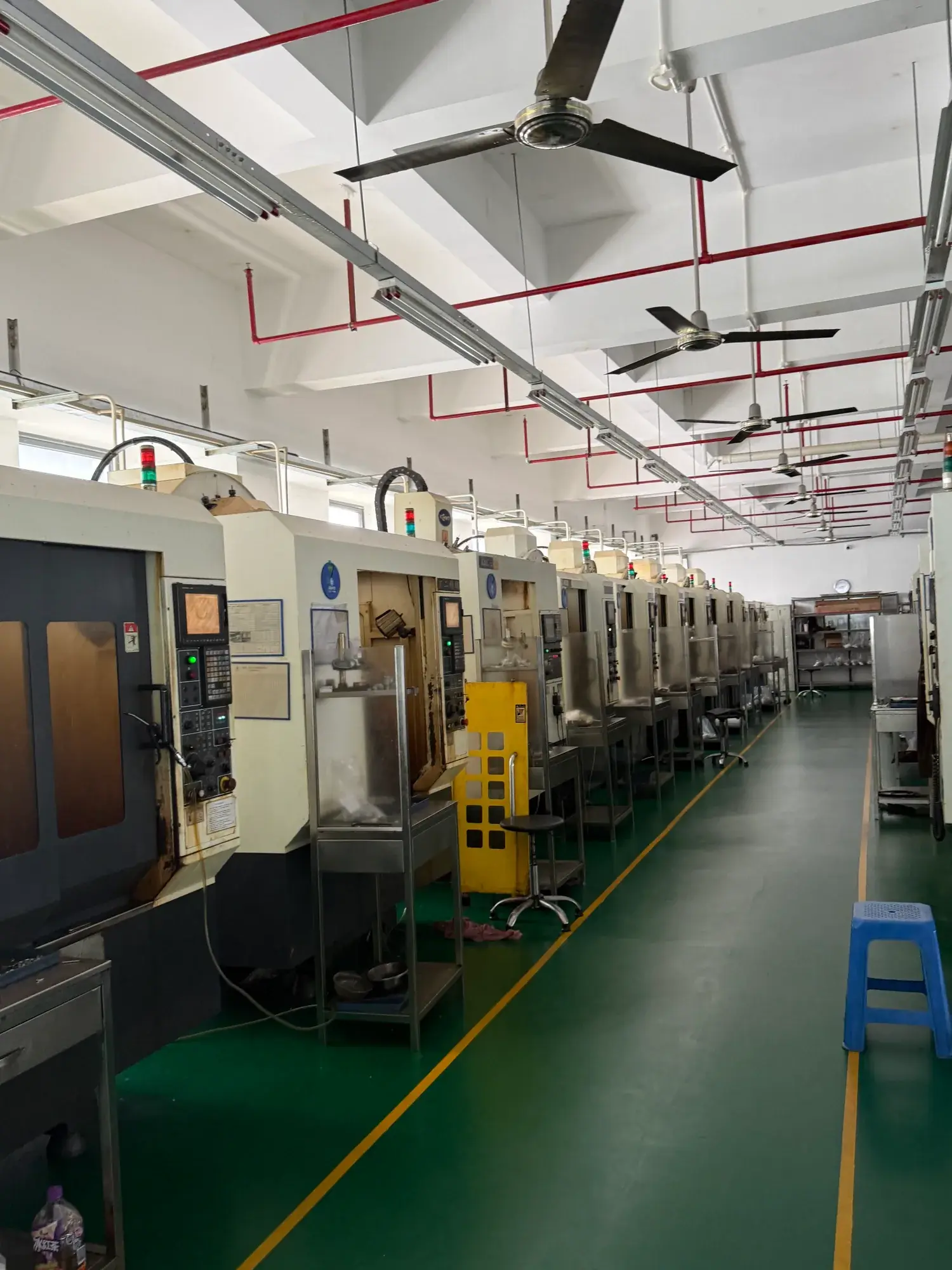
Machining is where a drawing becomes a physical component. The constraint is not only the shape, but how a part is held, cut and released without distorting it.
The twentieth case has to match the first, so consistency matters as much as precision.
Complex geometry
Forms that need more than a simple approach.
Multiple surfaces
Faces that must relate to one another across setups.
Machining strategy
How a part is held and cut, and how that shows in the finish.
Preparation for finishing
Leaving surfaces in a condition the finish can work with.
Consistency across parts
Keeping mating components interchangeable across a run.
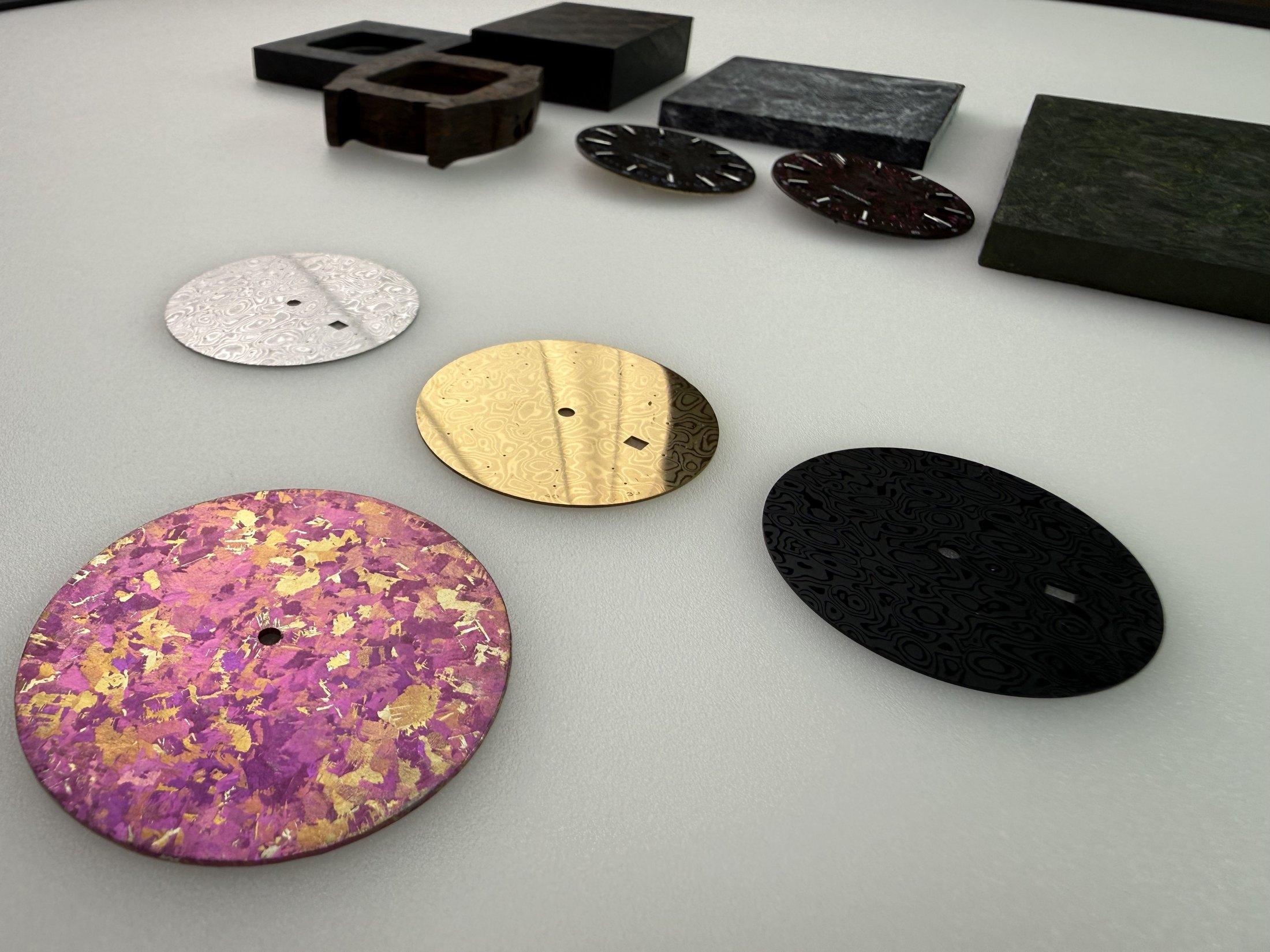
Dial and hands
The dial is the most visible surface on the watch and the least forgiving. Dial thickness, applied marker height and hand clearance form one stack that has to clear the movement.
What matters at development stage is that the design is resolved against the movement and the case it sits in.
Dial architecture
Thickness, construction, and how the dial locates in the case.
Applied markers
Marker height and fixing, and the surface they change.
Printing and surface treatment
How a design is transferred onto the dial.
Lume
Application method, and what sits above or below it.
Hand design
Profile, length, counterweight, and clearance above the dial.
Movement interface
Dial feet, movement diameter, and the reference points.
Date and apertures
Aligning windows and apertures with the movement.
Demonstrated in
Movement integration
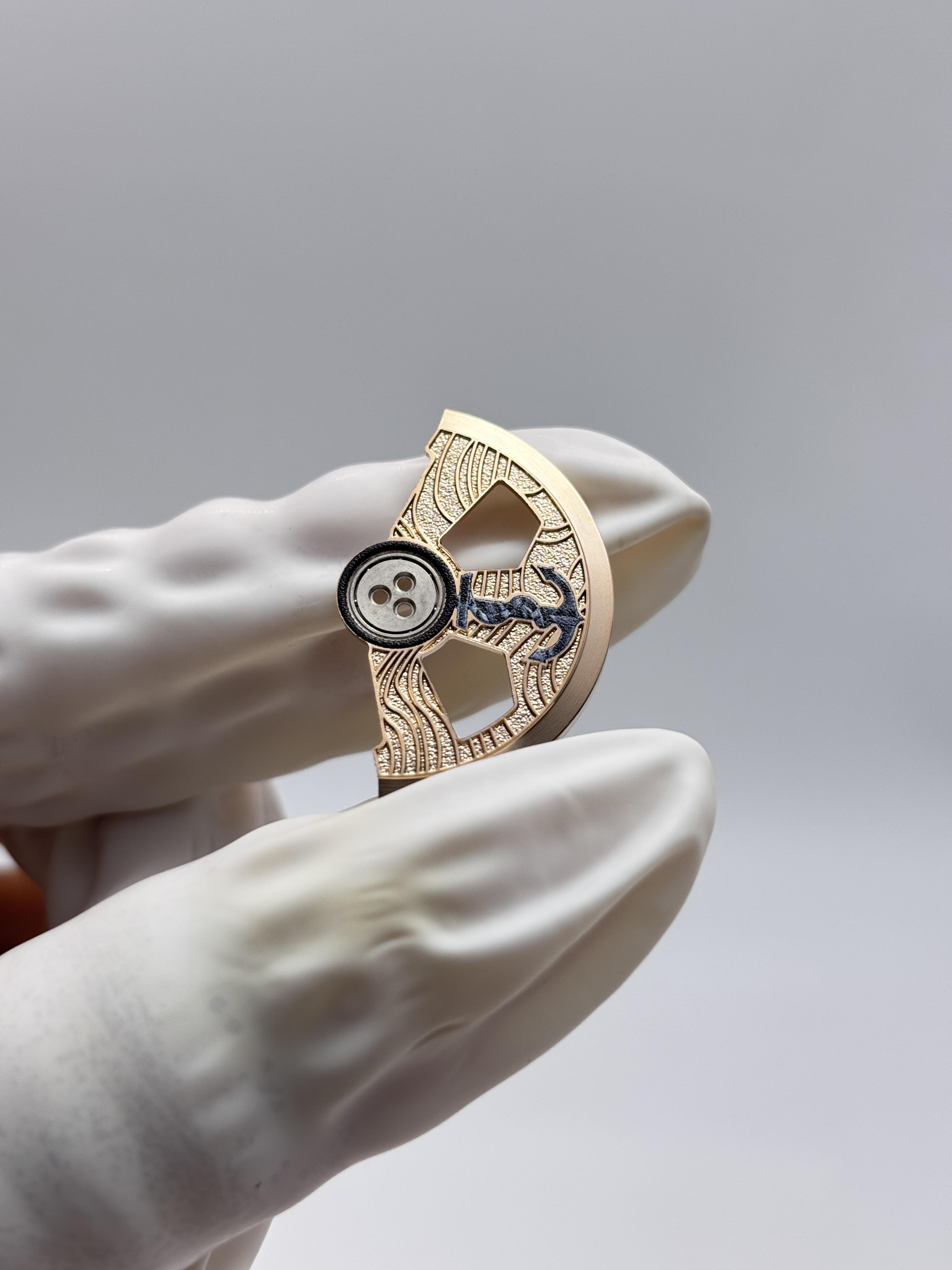
The movement is the fixed point a watch is designed around. Its diameter, height and stem position determine the internal geometry of the case before any other component is considered.
Integration is the work of resolving everything that has to align with it.
Movement selection
How the movement constrains case, dial and hand stack.
Case architecture
The internal geometry that holds and locates the movement.
Stem and crown alignment
Crown position, so the stem meets the movement cleanly.
Dial interface
Mounting points, and the clearance the dial feet need.
Hand stack
Height from dial to crystal, and clearance between hands.
Movement holder
Internal support that locates and stabilises the movement.
Caseback clearance
Space behind the movement, and the sealing surface around it.
Complications and apertures
Positioning pushers, apertures and additional displays.
Surface finishing
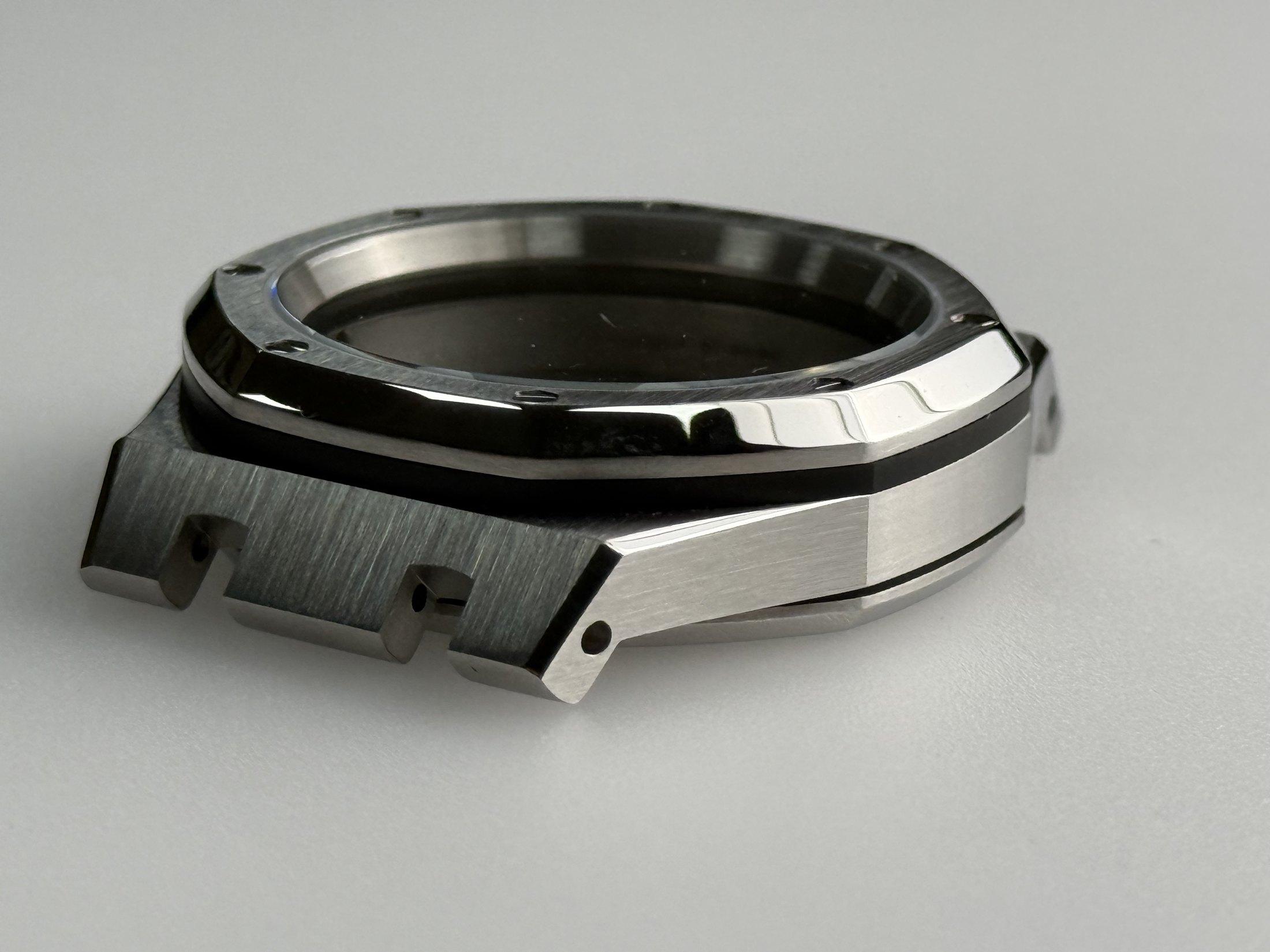
Finishing is where the quality of the geometry becomes visible. A surface that has not been prepared for a finish will not take it consistently.
The difficult part is rarely a single finish, but the boundary between two on the same component.
Brushing
Direction, consistency, and how brushed meets polished.
Polishing
Definition without softening the geometry underneath.
Bead blasting
A uniform, non-reflective surface where it suits the part.
Coatings
PVD and DLC, and what they ask of the base surface.
Transitions
The boundary between finishes, and keeping that line sharp.
Consistency
Keeping a finish reading identically part to part.
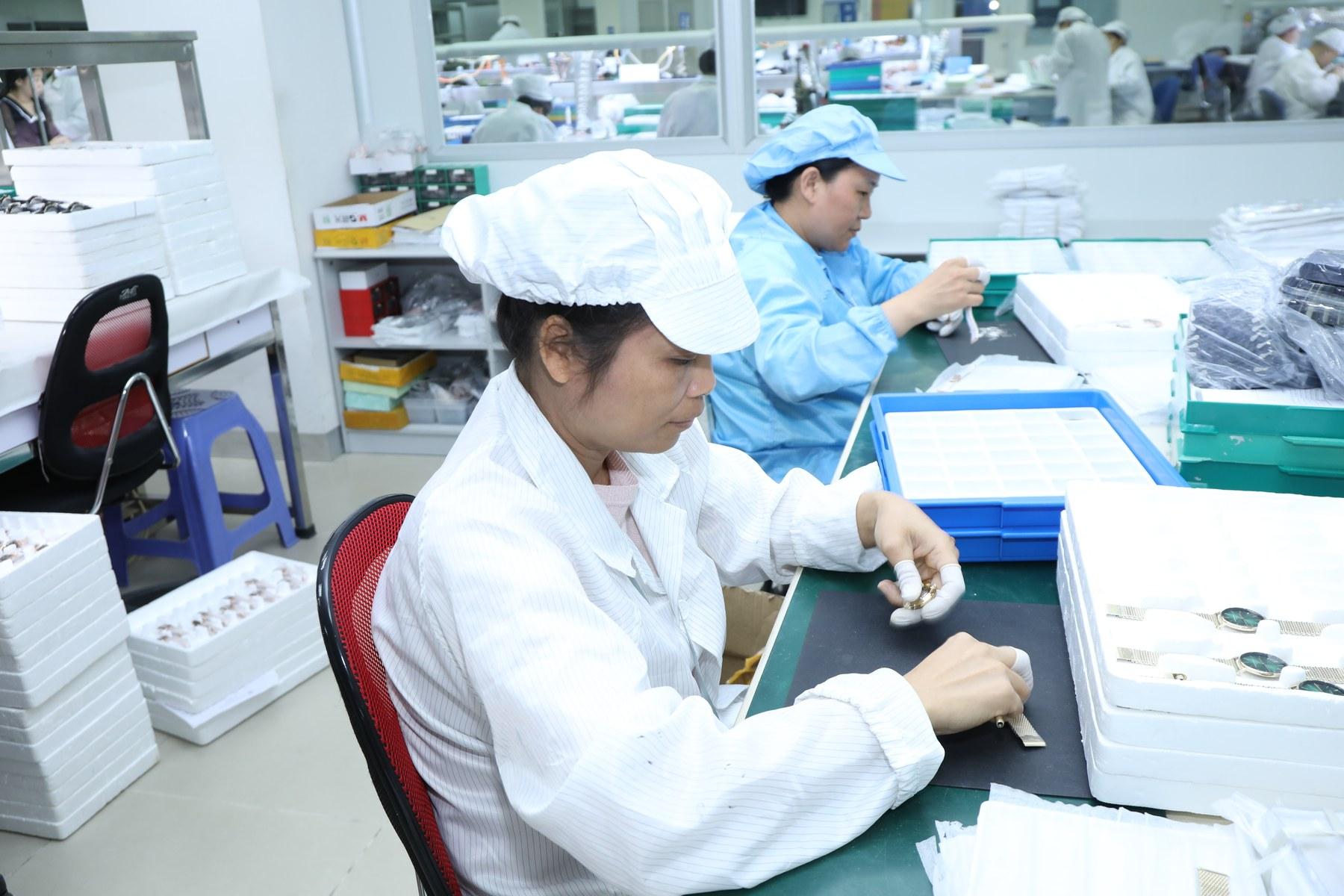
Assembly
Assembly is the first point at which the whole design is evaluated together. A case that measured correctly can still reveal a sealing problem; a dial that sat flat can still foul a hand.
Assembly is not a final step. It is the test of everything decided before it.
Case and crystal
Seating, retention and sealing before the movement goes in.
Dial and movement
Positioning the dial and confirming it clears.
Hands
Fitting and aligning the hand stack.
Crown and stem
Fitting the crown and setting stem length.
Caseback
Closing the case and confirming the seal.
Bracelet or strap
Fitting end links or strap at the lugs.
Testing and quality control
Quality is a sequence of checks across production rather than a single gate at the end. A fault found early costs a component; the same fault found late costs a watch.
The detailed inspection workflow belongs to the quality page.
Incoming inspection
Materials and components checked before a project starts.
In-process checks
Checking during production, before a deviation gets expensive.
Visual and finishing review
Surface and finish judged against the agreed standard.
Functional checks
Movement function and timekeeping verified before release.
Water resistance testing
Confirming the water resistance agreed for the project.
Final inspection
Review and release of the finished watch.
Demonstrated in

Materials
Advanced Materials & Dial Techniques
Explore distinctive case materials, machined dial textures, luminous details and decorative finishes for your custom watch project. Material selection, construction methods and final specifications are reviewed against the design and manufacturing requirements of each project.
Custom Dial Materials & Finishes
Dial character comes from how a surface is cut, layered and finished. These references show directions that can be explored during development; the construction behind each is agreed against the project's own specification.
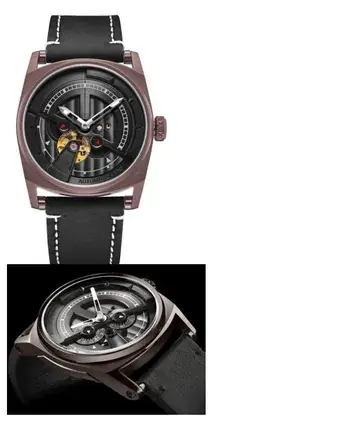
Dial construction reference
Open-worked dial architecture
Dial openings and bridges are shaped around the movement beneath them, so the dial, the hand stack and the case clearances are developed together rather than in sequence.
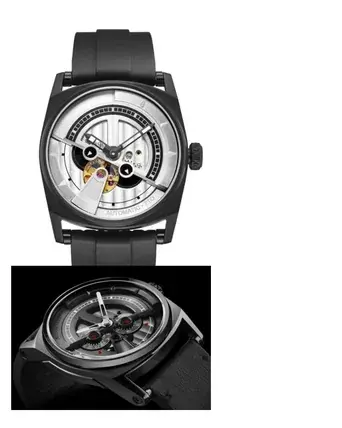
Dial construction reference
Skeleton dial construction
An open dial exposes the movement, which makes the finish of the parts behind it part of the design. Those surfaces are specified deliberately, not left as a by-product of assembly.
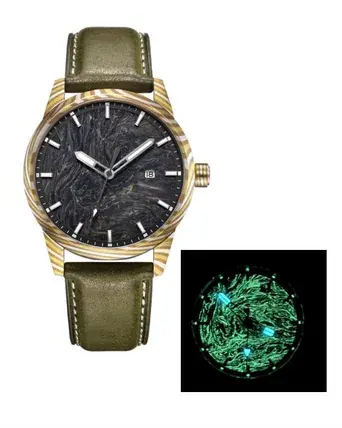
Dial finish reference
Luminous dial detail
Luminous application can sit in the dial surface, in the hands or in inserts. What is used, and how much of the dial it covers, is a legibility decision taken with the design.
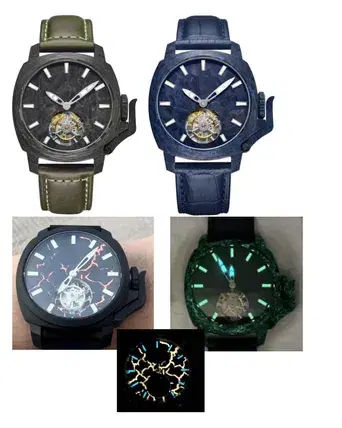
Dial finish reference
Open-heart dial with luminous detailing
An open-heart layout puts the escapement on show. The aperture, the finishing around it and the luminous treatment are reviewed together so the result reads as one design.
Advanced Case Material Options
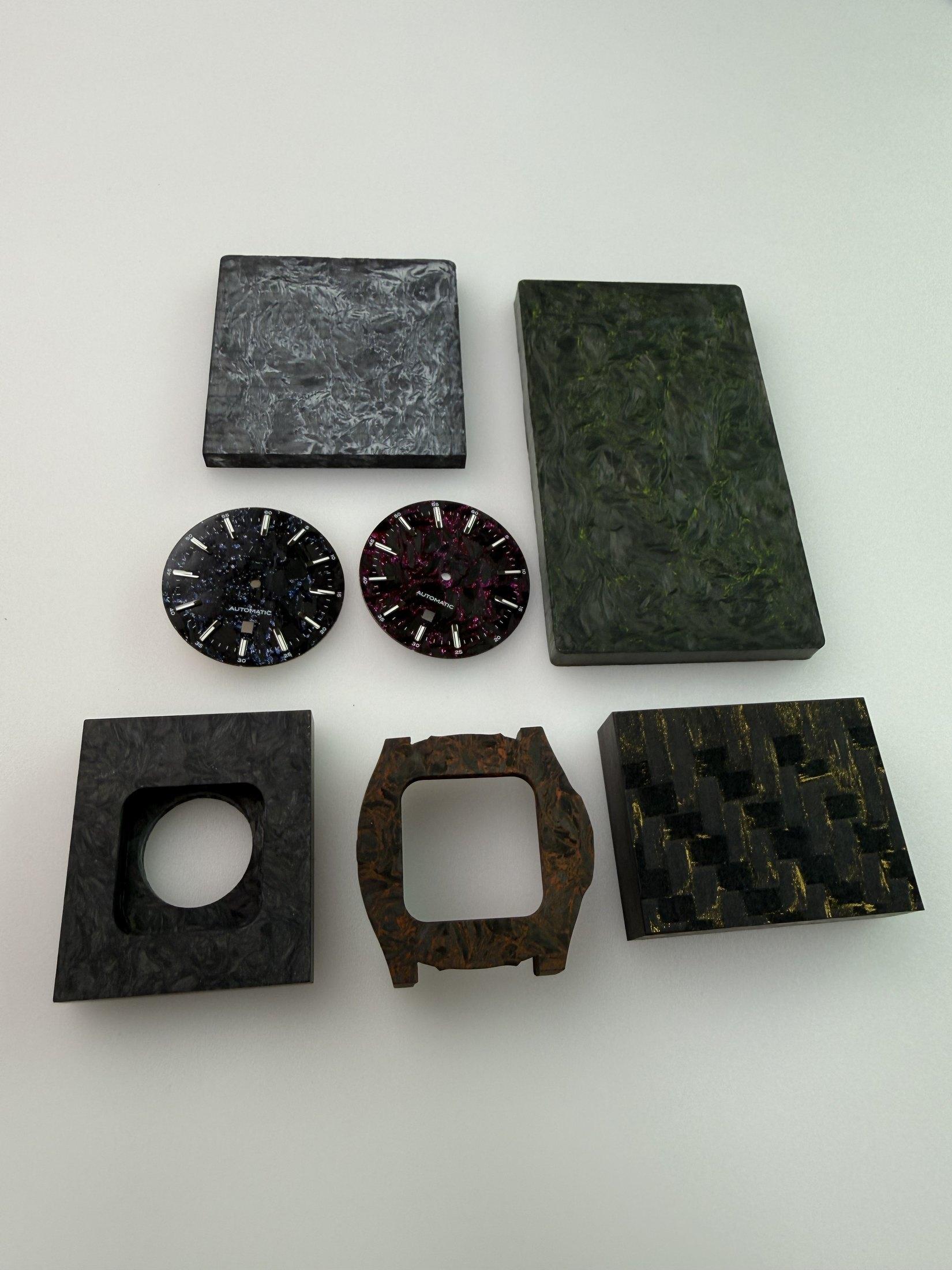
From layered metals to patterned surfaces, material choice shapes how a case reads in the hand. Appearance, machinability and finishing behaviour are reviewed before a material is committed to a specification.
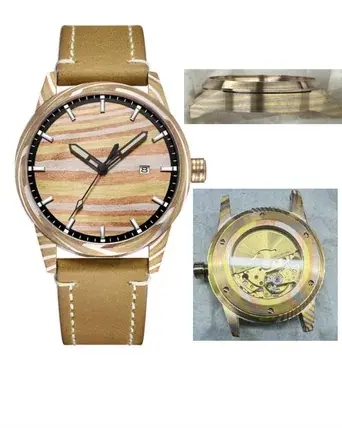
Material reference
Layered multi-tone metal
More than one metal tone can be present in a single surface, so the pattern belongs to the material rather than sitting on top of it. Composition, layering and finishing are confirmed per project.
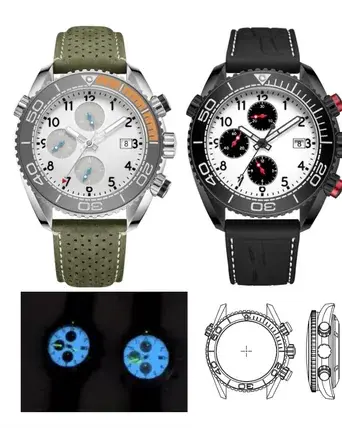
Case construction reference
Chronograph case construction
A chronograph case carries additional apertures, pushers and interfaces. These are developed as one structure, which is what keeps the dial layout, the movement and the case in agreement.
Patterned zirconium–titanium, ceramic components and carbon-fibre appearance are also explored where a project calls for them. Availability and surface appearance are reviewed as part of engineering.
System thinking
Every component affects another.
These areas are not independent services. A decision in one places a constraint on the next, and the cost of changing it rises as the project moves forward.
Movement
- Case architecture
- Crown position
- Dial interface
- Hand stack
Case geometry
- Crystal
- Bezel
- Finishing
- Bracelet fit
Dial
- Markers
- Hands
- Movement clearance
This is why development and manufacturing have to be discussed together rather than quoted separately.
Have a watch project in development?
Tell us what you are building and where you are in the process. A concept, a specification, drawings or reference material all help the project be evaluated.