Quality
Quality controlin watch manufacturing.
Quality is evaluated across components, finishing, assembly, function and final inspection — not only after the watch is complete.
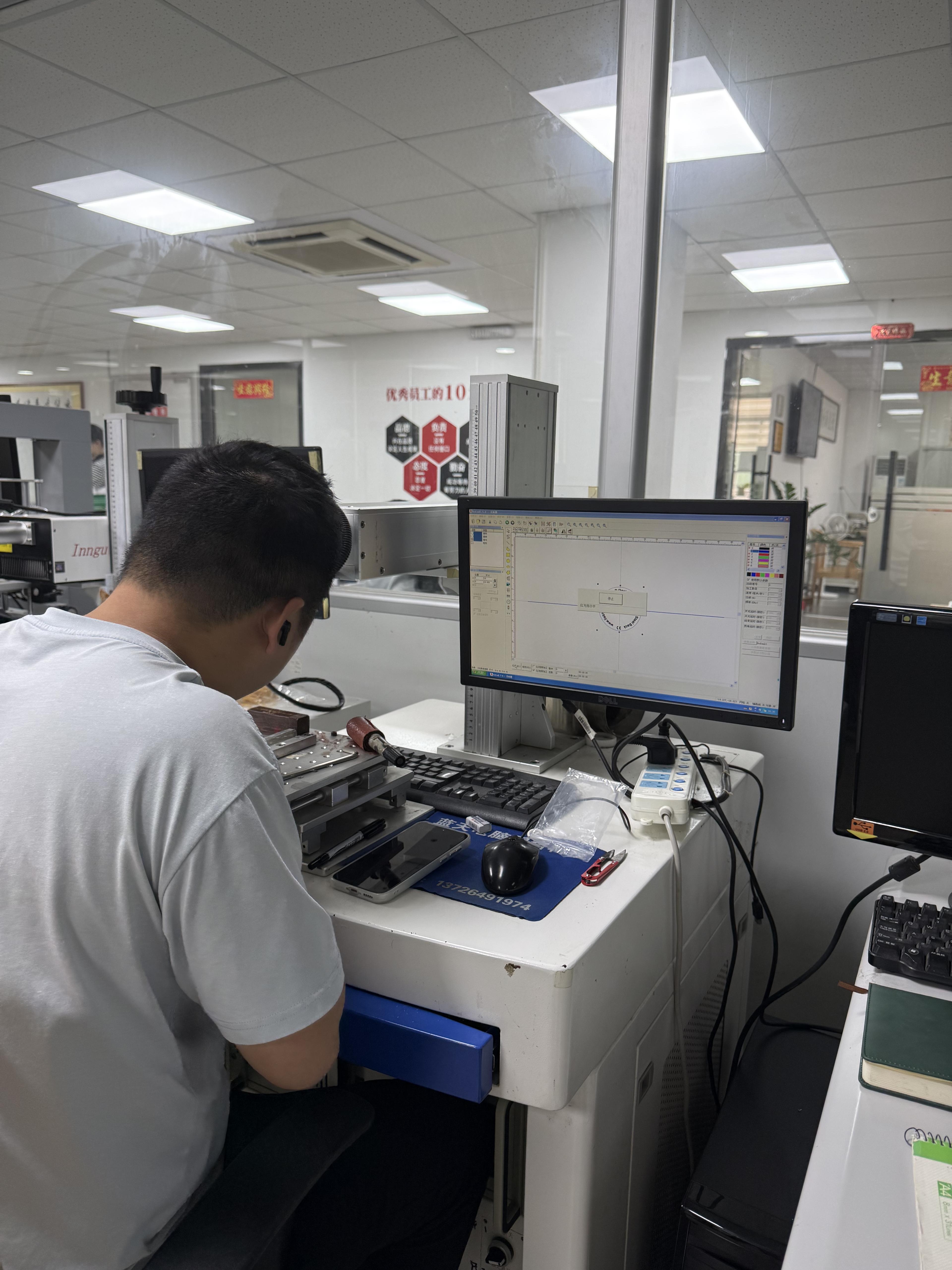
Process control
Quality cannot be added at the end.
A finished watch reflects the decisions and the work completed throughout development and production. Work that goes wrong early does not stay in the stage that produced it — it is carried forward by everything built on top of it.
The purpose of process control is to find an issue while the correction is still local to one operation, rather than after other operations have been completed around it.
Problems in any of these can carry forward into later stages:
- Component geometry
- Interfaces between parts
- Surface preparation
- Finishing
- Assembly
Inspection can find a problem. A controlled process is intended to stop that problem being carried forward in the first place.
Control flow
Seven points where the work is reviewed.
Each review is carried out before the next stage builds on the work. The sections that follow describe what each review is concerned with.
Incoming inspection
In-process inspection
Surface and finishing inspection
Assembly inspection
Functional testing
Water resistance testing
Final inspection
What a given project checks at each point depends on the watch, the materials and the stage of development it is at.
Component review
Check the component before building on it.
Components are reviewed against the function they have to perform in the assembly, not only against the drawing they were made from. A part can match its drawing and still be difficult to assemble.
Geometry, the interfaces between mating parts, and the openings that position other components are all easier to correct before finishing and assembly. After those steps, correcting one dimension means reworking several parts.
Critical geometry
The dimensions that decide how a component fits, moves or seals.
Interfaces between mating parts
Case, bezel, caseback, crown, crystal and movement have to agree about the same joint.
Fit in assembly
Whether the parts assemble as intended, not only whether each part is individually correct.
Openings and alignment
Where the crown, pushers, crystal and caseback sit relative to the movement inside.
Assembly dimensions
Dimensions that only take on meaning once another component is present.
Condition before finishing
Marks and irregularities that a later operation would set into the surface.
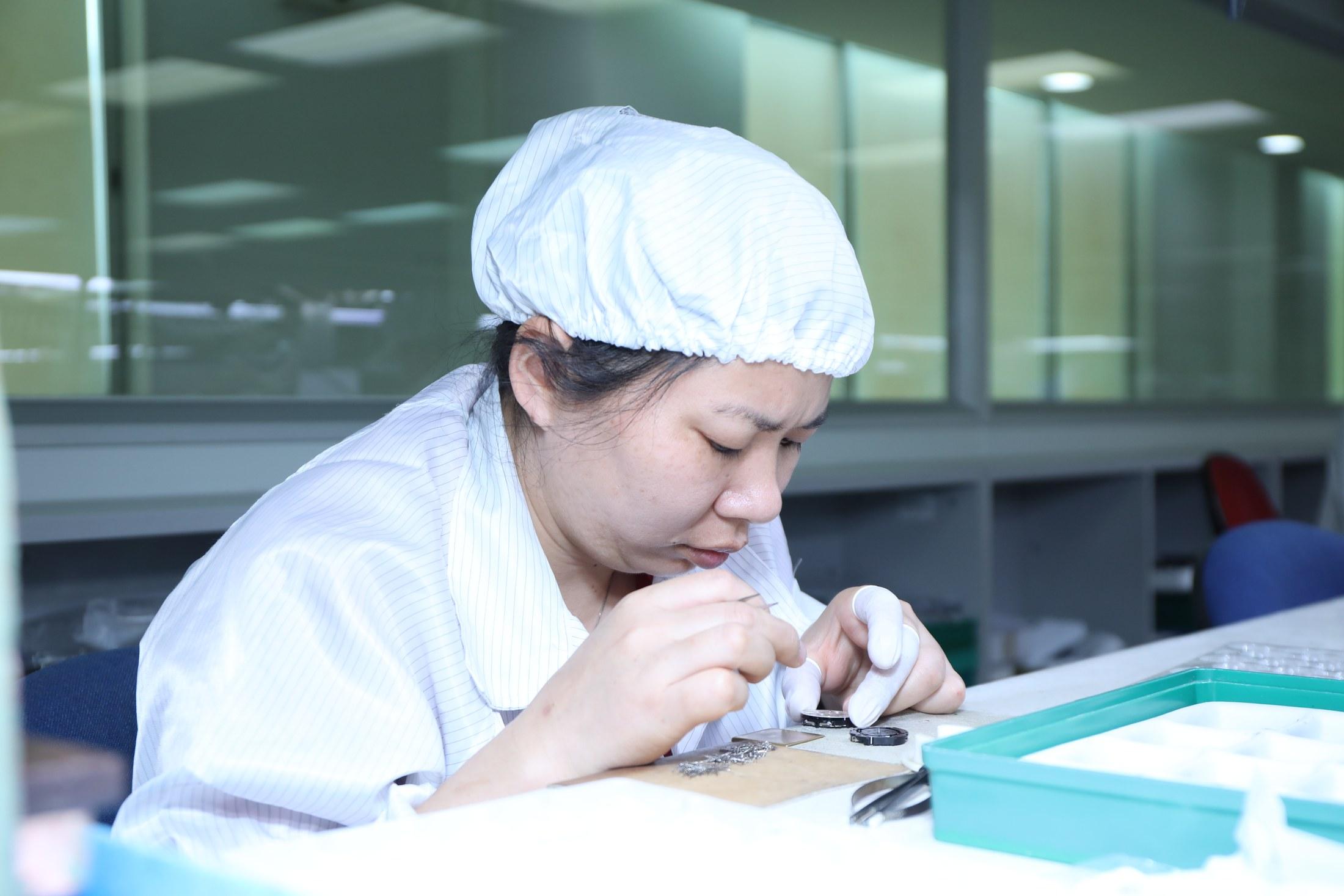
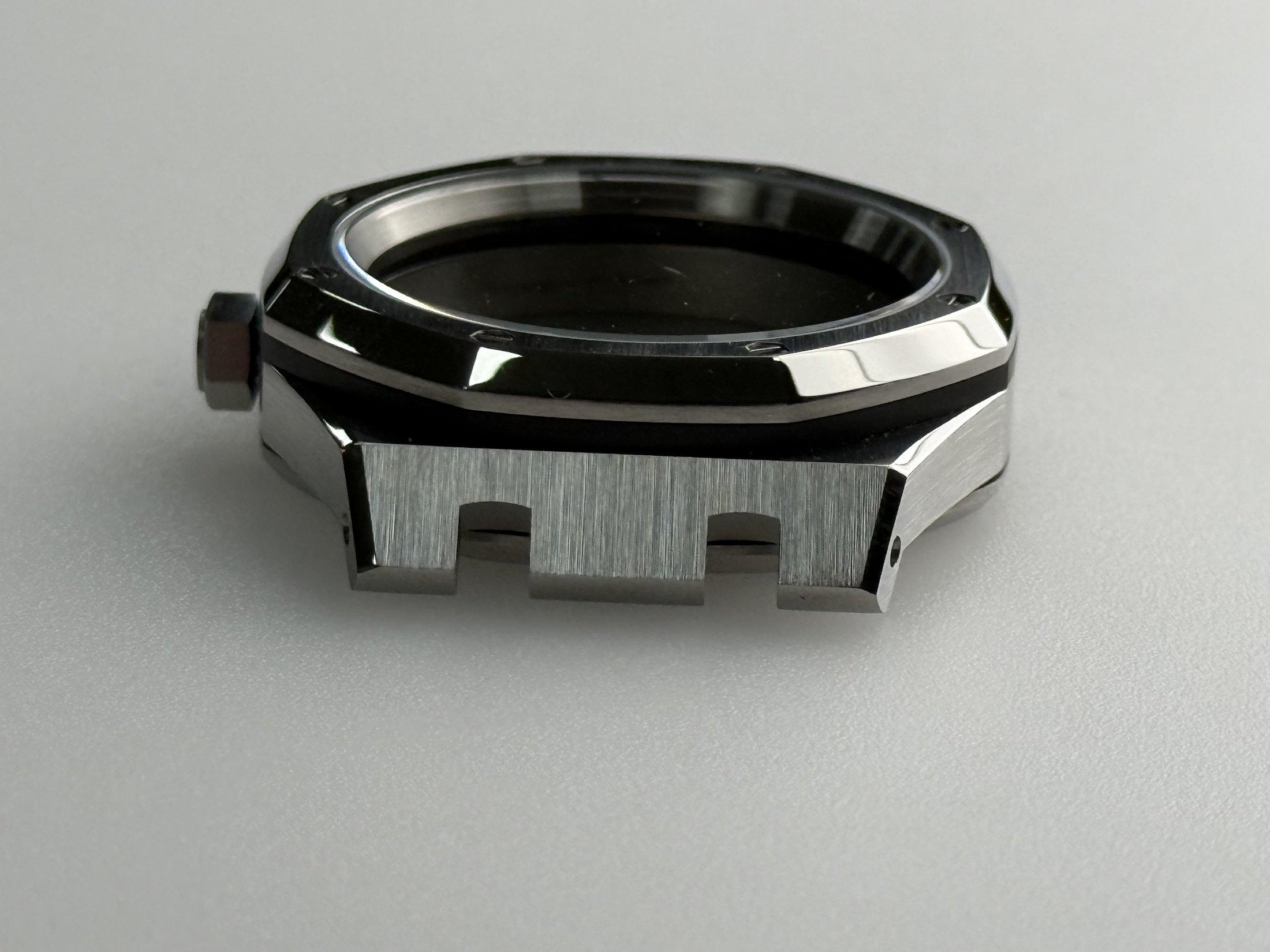
Surface review
Finishing makes small defects visible.
Surface preparation decides what a finish looks like, and it also decides how forgiving that finish is. A mark that disappears on a machined surface can become the first thing the eye finds on a polished one.
Reviewing the surface before and after treatment is what keeps an avoidable defect out of assembly, where correcting it is no longer a finishing operation.
What a given watch requires depends on the finish specified for it — a brushed case, a polished one and a coated one do not fail in the same way.
Surface preparation
The condition of the surface before brushing, polishing or coating begins.
Brushing and polishing
Direction and consistency of the finish, and how the two read beside each other.
Coating appearance
Colour and texture consistency, and how the coating covers edges and recesses.
Transitions between finishes
Where a brushed surface meets a polished one, the boundary is part of the design.
Marks and irregularities
Handling and tooling marks, and irregularities in the material that the finish reveals rather than conceals.
Contamination
Residue from earlier operations, which affects both adhesion and appearance.
Visual consistency
Whether parts that sit next to each other read as one finish.
Assembly
Assembly is where the system comes together.
Assembly is the first point at which the decisions made upstream are tested together instead of individually. Components that were each correct can still meet incorrectly.
What is checked depends on the watch architecture — the movement, the case construction, and the functions the watch is specified to have. Not every watch uses every check.
Movement installation
Seating, fixing and clearance inside the case.
Dial and hands
Alignment, spacing and the hand stack above the dial.
Crown and winding
Operation of the crown and stem through the case.
External functions
Where the design includes a moving external element such as a bezel or pushers.
Caseback closure
Whether the case closes as designed, and what that means for the seal.
Bracelet or strap fit
Attachment, alignment, and how the watch sits when worn.
General function
That the watch runs and operates as specified.

Water resistance
Water resistance is a system property.
Water resistance does not belong to any single part. It is the result of case construction, the crystal interface, the crown and its tube, the caseback, and the seals and gaskets between them holding together at the same time.
Because it is a system, it is assessed as one. The construction that keeps water out is the same construction that has to assemble and seal consistently, which is why case architecture and component interfaces are settled long before the watch is built.
Case construction
How the case is built and how its parts meet.
Crystal interface
The joint between the crystal and the case.
Crown and tube
The one opening that has to move and seal at the same time.
Caseback
The closure at the back of the case.
Seals and gaskets
The components that close the remaining gaps.
Assembly
Whether the parts were fitted as designed.

Final inspection
Final inspection is the last gate, not the first check.
Final inspection reviews the finished watch as the brand will receive it: appearance, assembly condition, function, configuration, and anything the project specified beyond those.
By this point, most of what determines the outcome has already happened. Final inspection confirms the result, and it is the point at which anything still outstanding is raised before the watch is released.
Appearance
Finish consistency, marks, and the condition of visible surfaces.
Assembly condition
That the watch is closed, aligned and complete.
Function
Operation of the movement, the crown, and any function the watch is specified to have.
Configuration
That the finished watch matches the agreed specification — case, dial, hands, and bracelet or strap.
Project-specific requirements
Points agreed for this project, checked against the agreed specification.

Feedback
When an issue appears, the process should learn from it.
An issue is only useful if it changes something. The response is short, and it ends by confirming the change produced the result that was intended.
Identify
Record what was found, where it appeared, and at which stage it was caught.
Evaluate
Establish whether this is an isolated case or something the process will produce again.
Determine likely cause
Trace it back to the operation, material or decision that allowed it.
Correct the process
Adjust the operation, or the specification, wherever the likely cause sits.
Re-check
Confirm the corrected process produces the intended result before it runs again.
Not every issue has a single identifiable cause. The intent is that an issue found once is understood well enough that the next project does not find it the same way.
Upstream decisions
Quality begins before inspection.
Much of what a review can find was decided earlier, when the architecture, the materials and the interfaces were chosen. These are the same decisions the Capabilities page describes in detail.
Case architecture
- Sealing
- Assembly sequence
- Component interfaces
Material
- Machining behaviour
- Finishing options
- Surface appearance
Dial architecture
- Clearances
- Marker alignment
- Hand spacing
Movement selection
- Internal architecture
- Crown and hand interfaces
- Case dimensions
Finishing decisions
- Surface preparation
- Transitions between finishes
- Visual consistency
Quality is therefore partly designed into a project and partly verified afterwards. Both matter, and addressing it earlier means correcting less work.
Build quality into the project from the start.
Share your watch concept, drawings, specifications or reference material so the project can be reviewed.